


So, even though I have experience working in Quality Assurance and currently work as a PM, my boss insisted that I take up a few UX courses. Initially I wasn’t sure how that would help, however the more I learnt the more I understood how vital it is for an application to be user centric.
Before We Do A Deep Dive Into How We Should Create A User-centered Design, Let’s Understand What Is UX Or User Experience.
What is a UX Design?
UX Design is the process of making a product more enjoyable and usable for the consumer whether it’s a soap dispenser, a can opener or a website. For example, I am using a word editor right now to write this blog and somebody had to put thought into how it would be a better experience for me to use this application.
You can check this blog to read in detail about the Core Elements for UX Web Design.

Why is User-Centered Design Important?
It is important that your product has a user-centered design, this means that the users of your website or application should feel that they have more control, more choices and more flexibility than they might have in other products.
Methods to Create User-Centered Design:

A. Research and Analysis:
This is the most important piece of the design process. Through research and analysis, you can discover your user’s needs, their behaviour, and their expectations from your product.
You can also gather some useful information through interviewing your users by sending them surveys. It’s really useful when your users themselves tell you about their expectation. A survey is a great way of asking your users direct questions. You can use online tools to create surveys and send them through email to your potential customers and users.Some of the most popular and well-known online survey tools are:




A product built with the support of Research and Analysis makes the success of the product more realistic
and lucrative.
B. Concept
Once you have a deeper insight into what you want to achieve, you can get to the next step. Now, you need to focus on generating and exploring as many ideas as possible. Through brainstorming sessions within the team and individual analysis, each team member proposes their idea that will be later studied and tested.
It is important to understand the whole idea of the product before starting the design process.
These online tools make the brainstorming sessions more effective and helps your team to put together more ideas.




C. Design
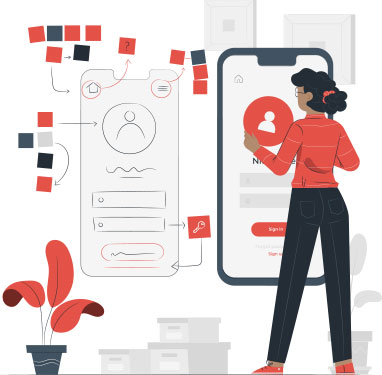
At this stage, you should have plenty of ideas that the team came up with during the concept stage. The team’s target now is to analyse the best ideas and decide which of these should be modelled. Based on the selected ideas, you’ll sketch a step-by-step roadmap for building a prototype.
Some of the best prototyping tools for UI/UX designers are:




The main assumption here is that you will only build the customer-facing surface (front end) of your product. In this way, the prototype will be up and running and ready for review.
Conclusion:
There is a variety of user-centered design processes. It can be incorporated into waterfall, agile, and other development approaches. Depending on your needs, the user-centered design process is a combination of several approaches and tasks. What tasks you should perform and in which order you should perform them depends on what you are developing.
If you are finding all of this cumbersome, contact us with your project/product ideas and we will do all that is required to deliver superior value and user experience.


